

TPX
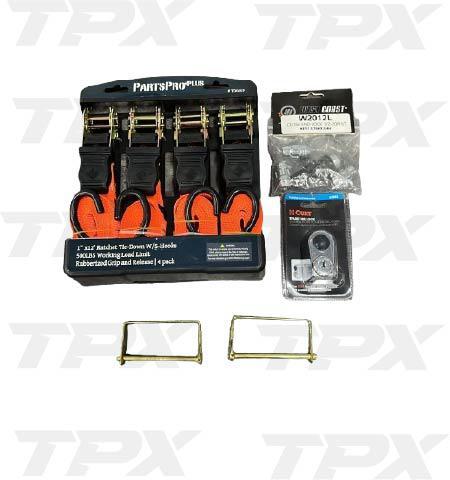
BASIC TRAILER BUNDLE
BASIC TRAILER BUNDLE
SKU:TPX1339
Couldn't load pickup availability
1" x 12' Ratchet Tie Down W/S Hooks ( 4 Pack)
A 1" x 12' Ratchet Tie-Down with S-Hooks is a durable cargo securing strap designed to safely hold loads during transport. It features a 1-inch-wide, 12-foot-long high-strength webbing strap paired with heavy-duty S-hooks for quick and secure attachment to anchor points. The ratchet mechanism provides strong tensioning capability, while the rubberized grip handle offers added comfort and control during tightening. A convenient quick-release function allows for fast unloading and strap removal. With a 500 lb Working Load Limit (WLL), this tie-down is ideal for securing motorcycles, ATVs, lawn equipment, cargo, and other medium-duty loads for transport and storage.
Spare Tired Lock
A spare tire lock is a security mechanism designed to prevent theft of a vehicle’s spare tire, especially when the tire is mounted underneath the vehicle (common on trucks, SUVs, and vans).
How a Spare Tire Lock Functions
-
Secures the Spare Tire Carrier
- The spare tire is usually attached to a cable winch, bracket, or carrier under the vehicle.
- The lock prevents unauthorized access to the release mechanism or mounting hardware.
-
Locks the Lowering Mechanism
- Many vehicles use a crank system to lower the spare tire.
- A spare tire lock blocks the crank access point or requires a special key/tool to operate it.
-
Uses a Keyed or Patterned Lock
- Common lock types include:
- Key cylinder locks
- Tubular locks
- Specialized security nuts/bolts
- Only the matching key or adapter can release the tire.
- Common lock types include:
-
Prevents Cable Theft
- On cable-hoist systems, thieves may cut the cable.
- Some advanced locks add hardened steel shields or reinforced plates to deter cutting tools.
Main Components
- Lock cylinder or keyed cap
- Mounting bracket
- Security bolt or retaining plate
- Key or coded removal tool
Typical Applications
- Pickup trucks
- SUVs
- Commercial vans
- Trailers with externally mounted spare tires
Benefits
- Reduces spare tire theft
- Protects expensive wheel/tire combinations
- Adds security for off-road and fleet vehicles
- Can lower replacement and insurance costs
Locking Wheel Nuts
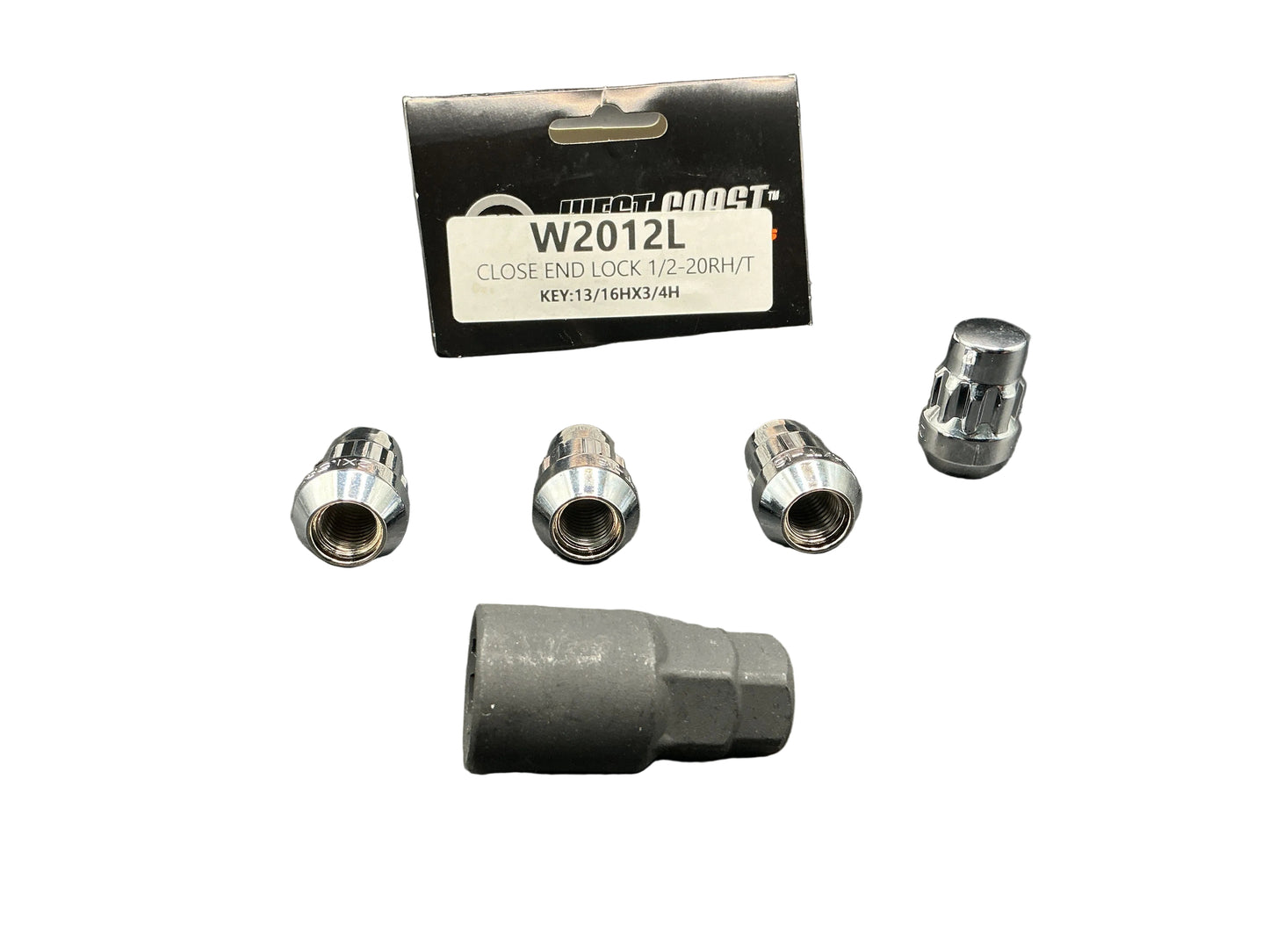
Locking wheel nuts (also called wheel locks or anti-theft lug nuts) are specially designed fasteners used to secure a vehicle’s wheels and help prevent wheel theft.
Function of Locking Wheel Nuts
A standard wheel nut can usually be removed with a common wrench or socket. A locking wheel nut has a unique patterned head that requires a matching “key” or adapter to remove it.
Their main functions are:
- Theft prevention — Makes it difficult for thieves to quickly remove alloy wheels or expensive rims.
- Wheel security — Keeps the wheel firmly attached to the hub like normal lug nuts.
- Deterrence — Even if not impossible to remove, they increase the time and effort needed, discouraging theft attempts.
How They Work
- One locking nut is typically fitted to each wheel.
- The locking nut has an irregular shape or coded pattern.
- A matching key socket fits over the pattern.
- Without the correct key, standard tools cannot easily grip or turn the nut.
Main Components
- Locking nut/bolt — Specially shaped wheel fastener.
- Key adapter — Custom tool matching the lock pattern.
- Protective outer ring (on some designs) — Spins freely to prevent gripping with pliers.
Advantages
- Adds security for expensive wheels.
- Easy to install.
- Works alongside vehicle alarms and immobilizers.
Disadvantages
- The key can be lost.
- Removal may require specialist tools if damaged.
- Can slightly increase wheel removal time during tire changes.
Common Applications
Used on:
- Passenger cars
- SUVs
- Performance vehicles
- Vehicles with alloy wheels
Snapper Pins (2)
A snapper pin (often called a snap pin, hitch pin clip, or locking pin) is a fastening device used to secure parts together while still allowing quick removal.
Main Function of a Snapper Pin
The primary function of a snapper pin is to:
- Prevent components from sliding apart
- Hold shafts, rods, wheels, or attachments in place
- Allow fast and tool-free installation and removal
How It Works
A snapper pin is inserted through a hole in a shaft or bolt. Its spring-loaded or bent locking section “snaps” into position, preventing the pin from backing out accidentally.
Common Uses
Snapper pins are commonly used in:
- Agricultural equipment
- Trailers and towing systems
- Machinery
- Automotive assemblies
- Construction tools
- Adjustable equipment and furniture
Advantages
- Quick to install and remove
- Reusable
- Provides secure locking
- No special tools required
Share